
The Contra Connection was a series of 24 articles for organizers and beginning callers by Larry Jennings, Dan Pearl, and Ted Sannella, published in the Country Dance & Song Society News between 1988 and 1995.
- #1, January-February 1988
- #2, May-June 1988
- #3, September-October 1988
- #4, January-February 1989
- #5, May-June 1989
- #6, September-October 1989
Appropriate Movements and Calls for Contras
by Ted Sannella, Dan Pearl, and Larry Jennings
- #7, January-February 1990
- #8, May-June 1990
How Long Should a Caller Let a Contra Run?
by Larry Jennings, Dan Pearl, and Ted Sannella
- #9, September-October 1990
- #10, January-February 1991
Should Contra Terminology Be Standardized?
by Dan Pearl, Larry Jennings, and Ted Sannella
- #11, May-June 1991
- #12, September-October 1991
- #13, January-February 1992
- #14, May-June 1992
- #15, September-October 1992
- #16, January-February 1993
- #17, May-June 1993
- #18, September-October 1993
- #19, January-February 1994
Providing Feedback to Callers and Musicians
by Larry Jennings, Dan Pearl, and Ted Sannella
- #20, May-June 1994
- #21, September-October 1994
- #22, January-February 1995
- #23, May-June 1995
- #24, September-October 1995
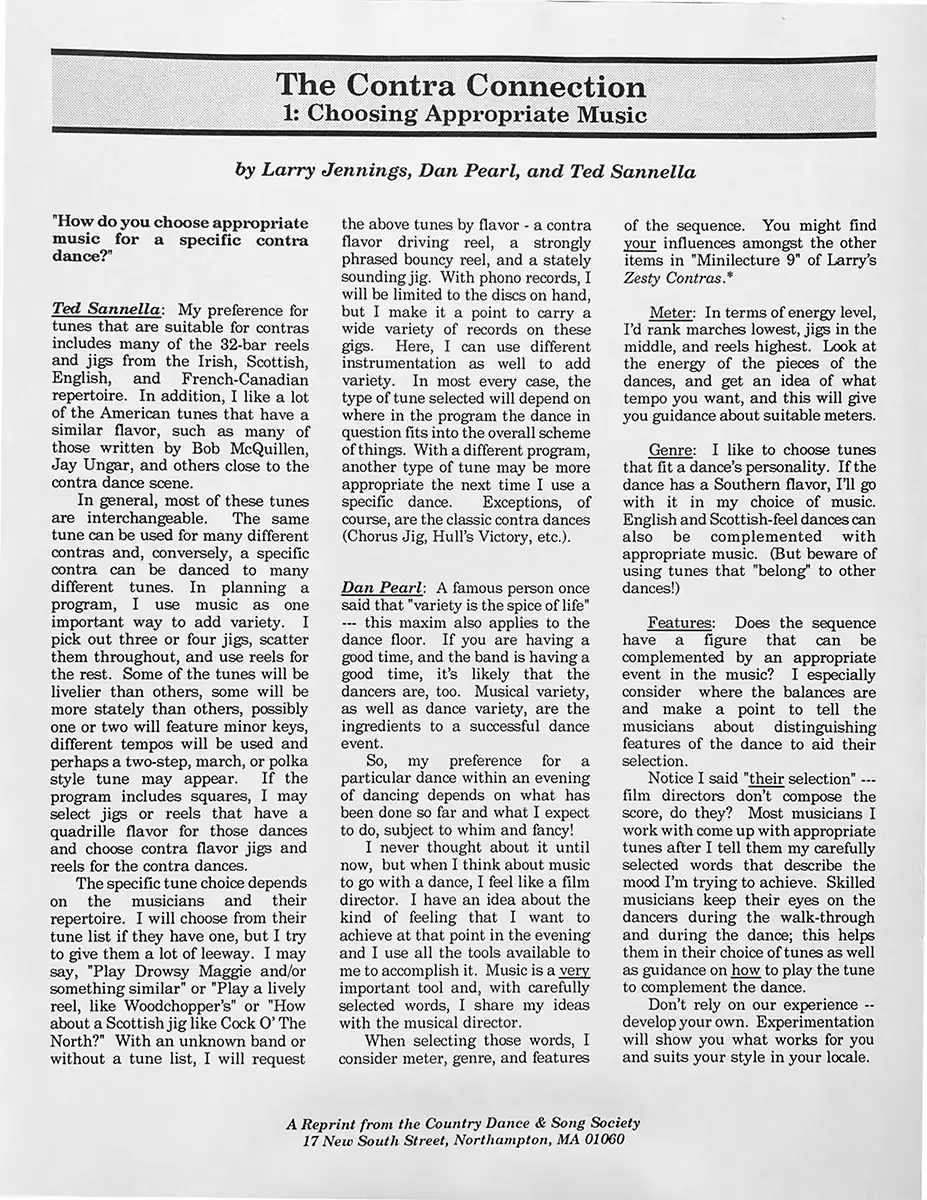
The Contra Connection: a series of 24 articles for organizers and beginning callers by Larry Jennings, Dan Pearl, and Ted Sannella, published in the Country Dance & Song Society News between 1988 and 1995.
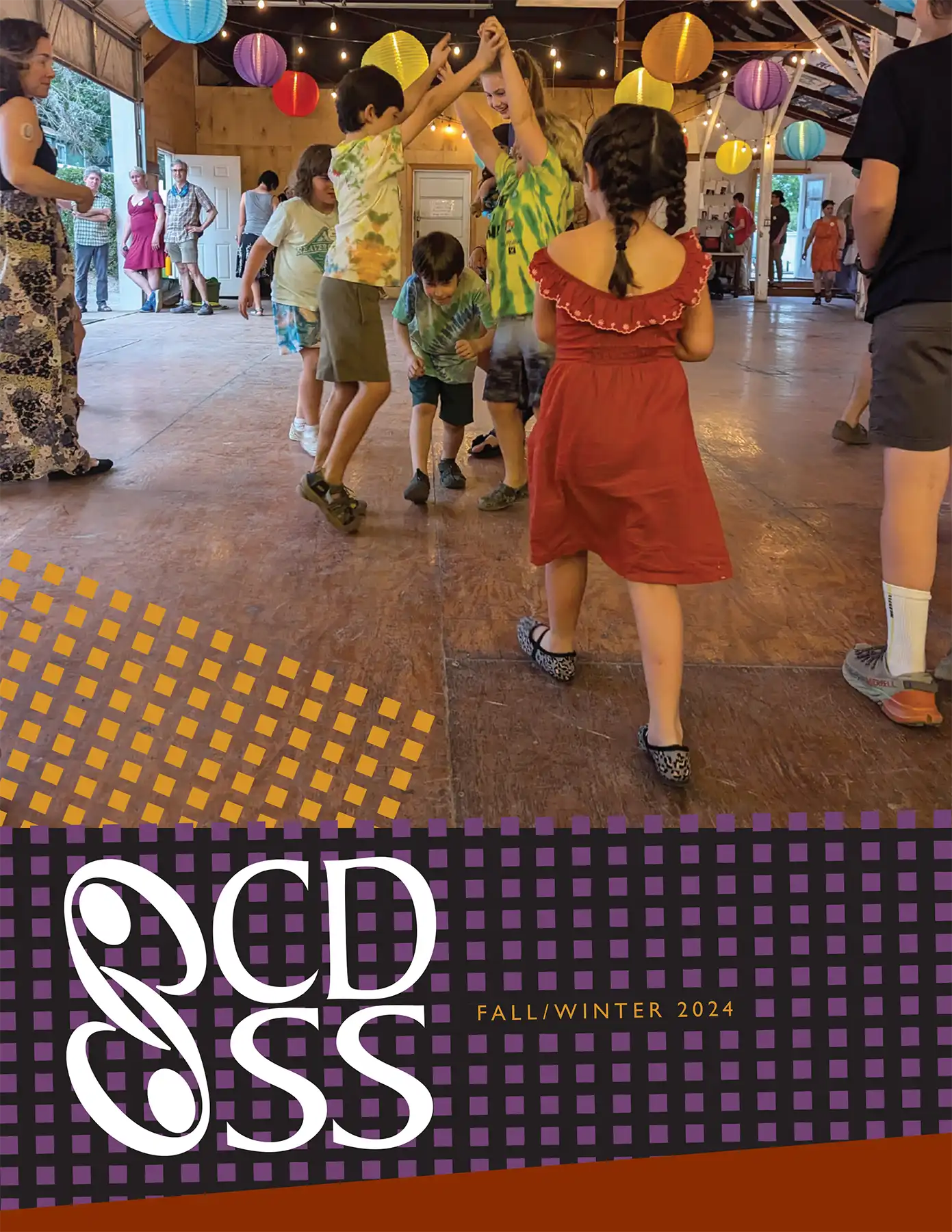
Fall/Winter 2024
Table of Contents PDF Flipbook
Special This Issue
- From the (New!) Director of Development, by Charmaine Slaven
- Stories from the CDSS Legacy of Joy Society: Remembering Judy Grunberg
- News From the CDSS Board, by Robbin Marcus
- 2025 Lifetime Contribution Awards:
- Contra Dance Videos For Beginners, by Henry Morgenstein
Recurring Contributions
- Balance and Sing: Online Store Updates
- Announcements
- ECD: Mr. Smukler’s Inauguration, by Jenna Simpson and Dave Wiesler
- Name that ECD (Emoji Country Dance): The Return!, by Renée Camus and Alex Bradley
- Special Events, Camps, Retreats, and Resources
- Masthead
Submitted by Judy Cook
“Waterbound” is a play-party song from Grayson County, Virginia. The earliest known recording was 1929 (unissued recording, Grayson County Railsplitters). It was recorded in 1938 by the Bogtrotters band of neighboring Galax, VA. The Grayson Co. Railsplitters’ recording is essentially identical to the canonical version sung in the folk revival, mostly learned from the Wade Ward/Bogtrotters recording. The recording I’ve chosen is of The New Golden Ring, led by Joe Hickerson, on the 1971 Folk-Legacy recording Five Days Singing – Volume 1.
I just got back from western North Carolina, where I enjoyed doing the first program in the newly renovated performance space in the 1904 Courtroom for the Ashe County Historical Society—a multi-media hour titled “Songs from These Mountains.” My closing song was “Waterbound.” My 45-year-old niece attended and remembered it well. I remember her standing on a kitchen chair and singing it beautifully when she was two years old.
Listen to The New Golden Ring singing “Waterbound:”
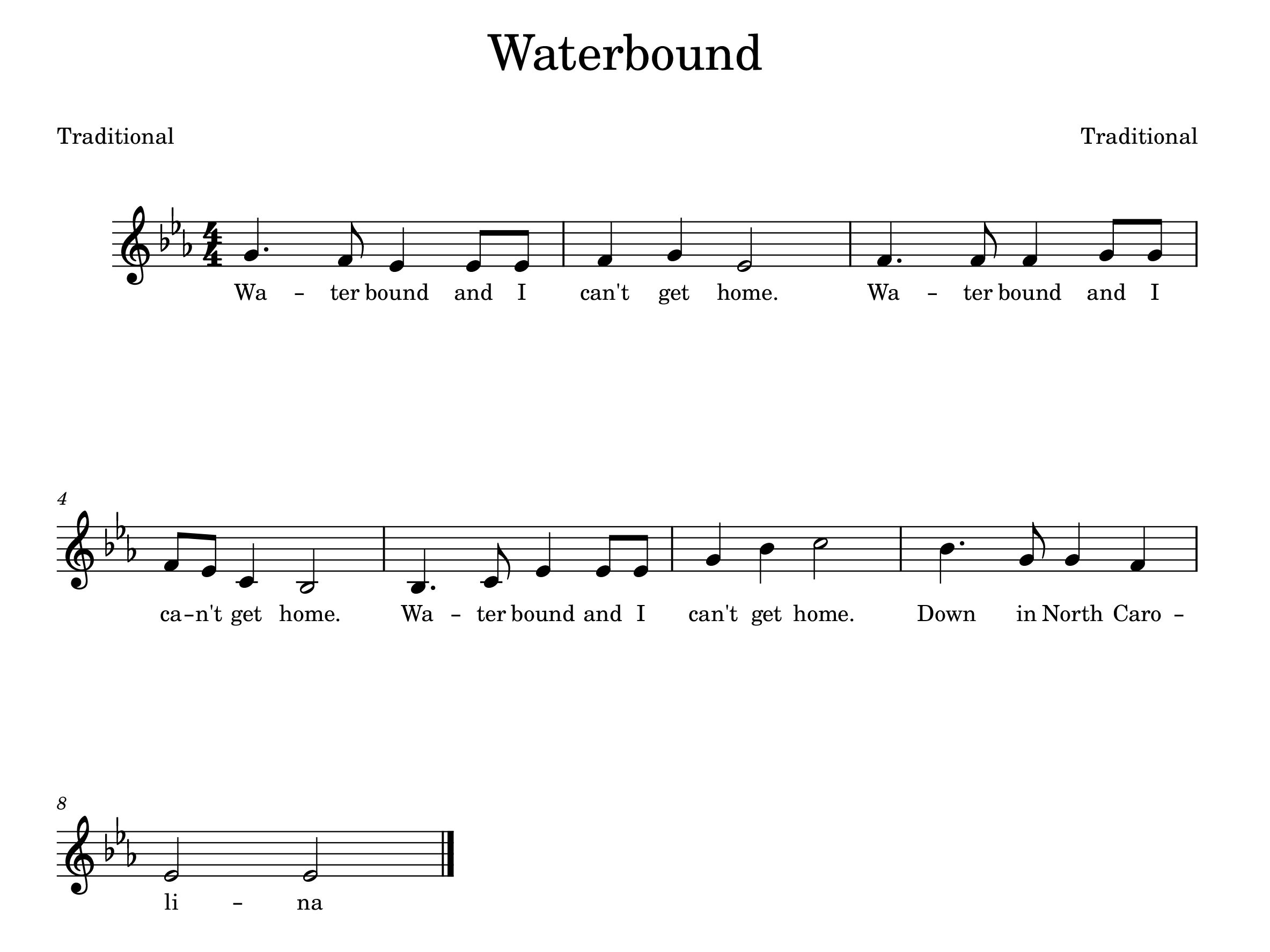
Lyrics: Waterbound
Traditional
Waterbound and I can’t get home
Waterbound and I can’t get home
Waterbound and I can’t get home
Down in North Carolina
Chickens crowin’ in the old plowed field
Chickens crowin’ in the old plowed field
Chickens crowin’ in the old plowed field
Down in North Carolina
Me and Tom and Dave goin’ home
Me and Tom and Dave goin’ home
Me and Tom and Dave goin’ home
Before the water rises
The old man’s mad and I don’t care
The old man’s mad and I don’t care
The old man’s mad and I don’t care
I’m going to get his daughter
If he don’t give her up, we’re gonna run away
If he don’t give her up, we’re gonna run away
If he don’t give her up, we’re gonna run away
Down in North Carolina
I’m going home with the one I love
I’m going home with the one I love
I’m going home with the one I love
Down to North Carolina
Judy Cook is an author, entertainer, and folk singer. She has been living in Oberlin, Ohio, with her husband Dennis since 2013. Since 1998, she has been touring throughout both Britain and the US. She is known for her repertoire and storytelling ability in song. Judy has one book and several CDs. Lyrics and recordings of her songs are on her website. You may reach her at [email protected].
Submitted by Julie Henigan
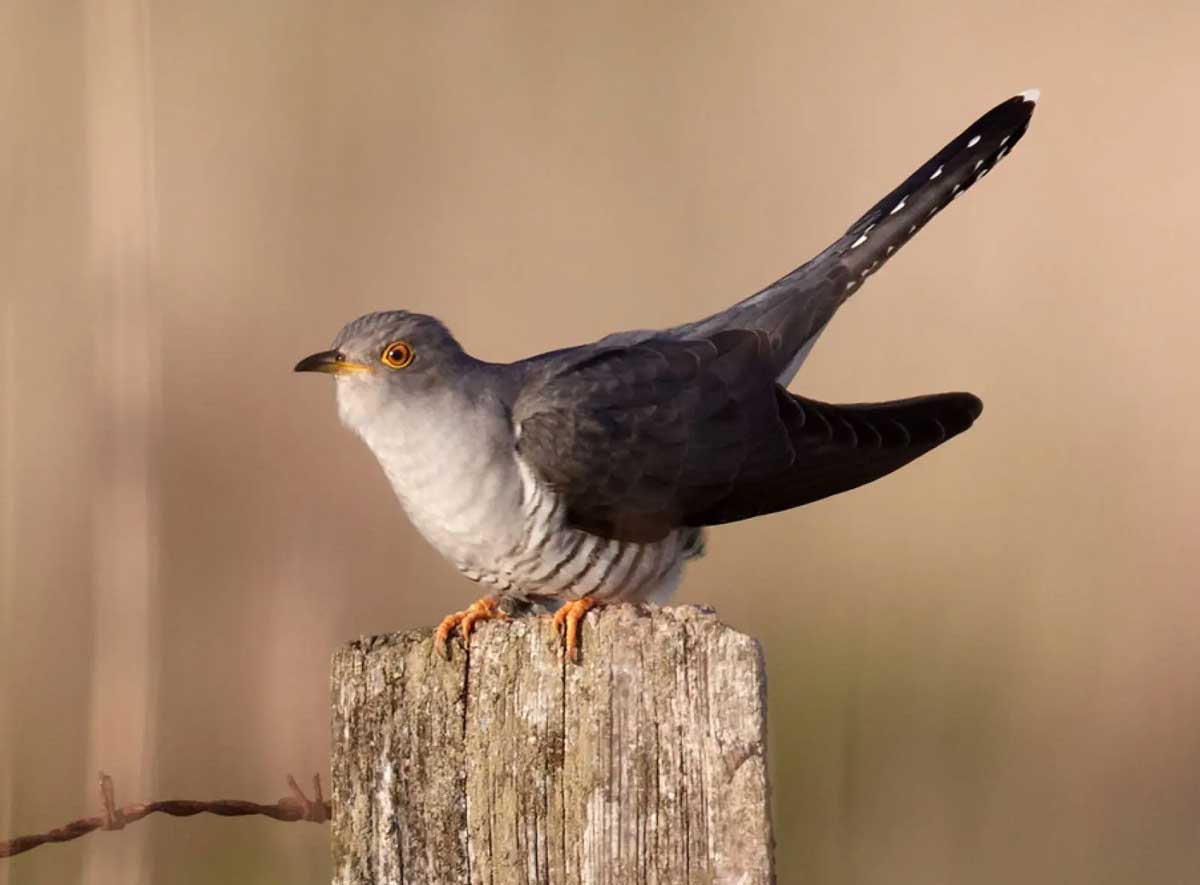
For August’s Song of the Month, I’ve chosen Clarence Ashley’s version of “The Cuckoo,” or, as he called it, “The Coo Coo Bird.” This song has strayed a long way from its British broadside roots in the late eighteenth and early nineteenth centuries, in which the song was a collection of so-called “floating verses” about unprosperous love.
In this country, one of the versions closest to the British originals is Jean Ritchie’s “The Cuckoo,” which she learned from her father’s side of the family. Other well-known American versions are those performed by Hobart Smith and his sister Texas Gladden.
Like Hobart Smith, Ashley included a banjo approximation of the cuckoo’s call in his accompaniment. His verses have more in common with “Jack of Diamonds” than with Jean Ritchie’s or the broadside versions, but it is identifiable by the inclusion of the verse about the cuckoo which never “hollers cuckoo till the fourth day of July”—the date being a clear expression of American patriotism, since in England the cuckoo doesn’t sing until “the summer draws near.” I myself heard a cuckoo in Cornwall in early May.
I learned this song by osmosis, so that when on a recent song Zoom my friend Mimi Wright sang Texas Gladden’s version, I grabbed my banjo and played an approximation of Clarence Ashley’s rendition. Here’s a link to one of the British broadsides.
Listen to Clarence Ashley singing “The Cuckoo:”
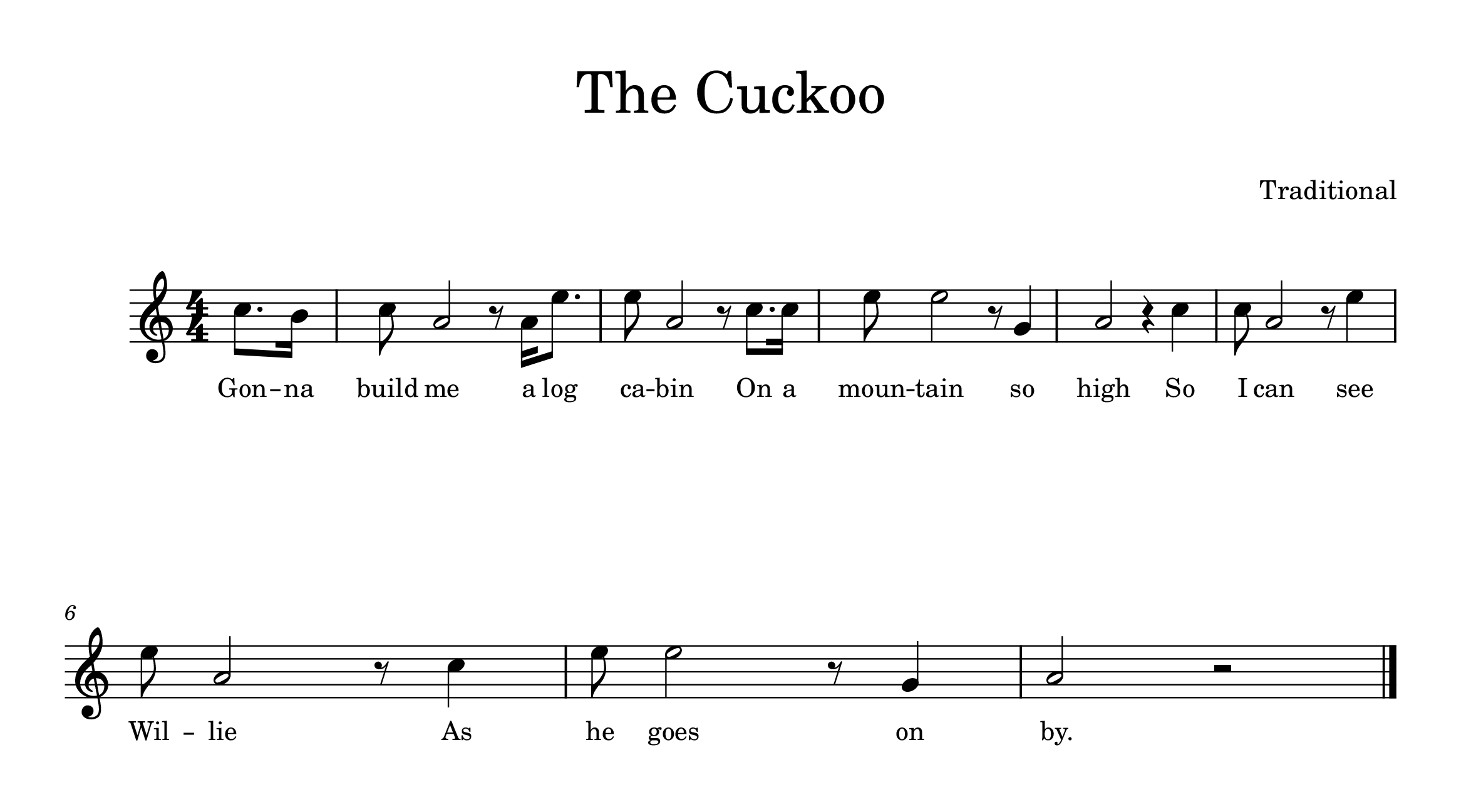
Lyrics
Gonna build me a log cabin
On a mountain so high,
So I can see Willie
As he goes on by.
Hmm-hmm, hmm-hmm-hmm, etc.
Oh, the coo-coo is a pretty bird,
She warbles as she flies.
She never hollers coo-coo
Till the fourth day of July.
I’ve played cards in England,
I’ve played cards in Spain;
I’ll bet you ten dollars
I beat you next game.
Jack-a-Diamonds, Jack-a-Diamonds,
I’ve known you from old;
Now, you’ve robbed my poor pocket
Of my silver and my gold.
Hmm-hmm, hmm-hmm-hmm, etc.
I’ve played cards in England,
I’ve played cards in Spain;
I’ll bet you ten dollars
I beat you next game.
Oh, the coo-coo is a pretty bird
She warbles as she flies
She never hollers coo-coo
Till the fourth day of July.
Julie Henigan writes: I grew up in the Missouri Ozarks, and I’ve been playing and singing traditional American, English, and Irish songs since I was about ten years old. I play guitar, 5-string banjo, lap dulcimer, and fiddle, which I use for instrumentals and song accompaniments. I have a CD (American Stranger) and two books on DADGAD guitar with Mel Bay to my credit. I am also a song scholar; for further details, see my website.
Submitted by Harry Tuft
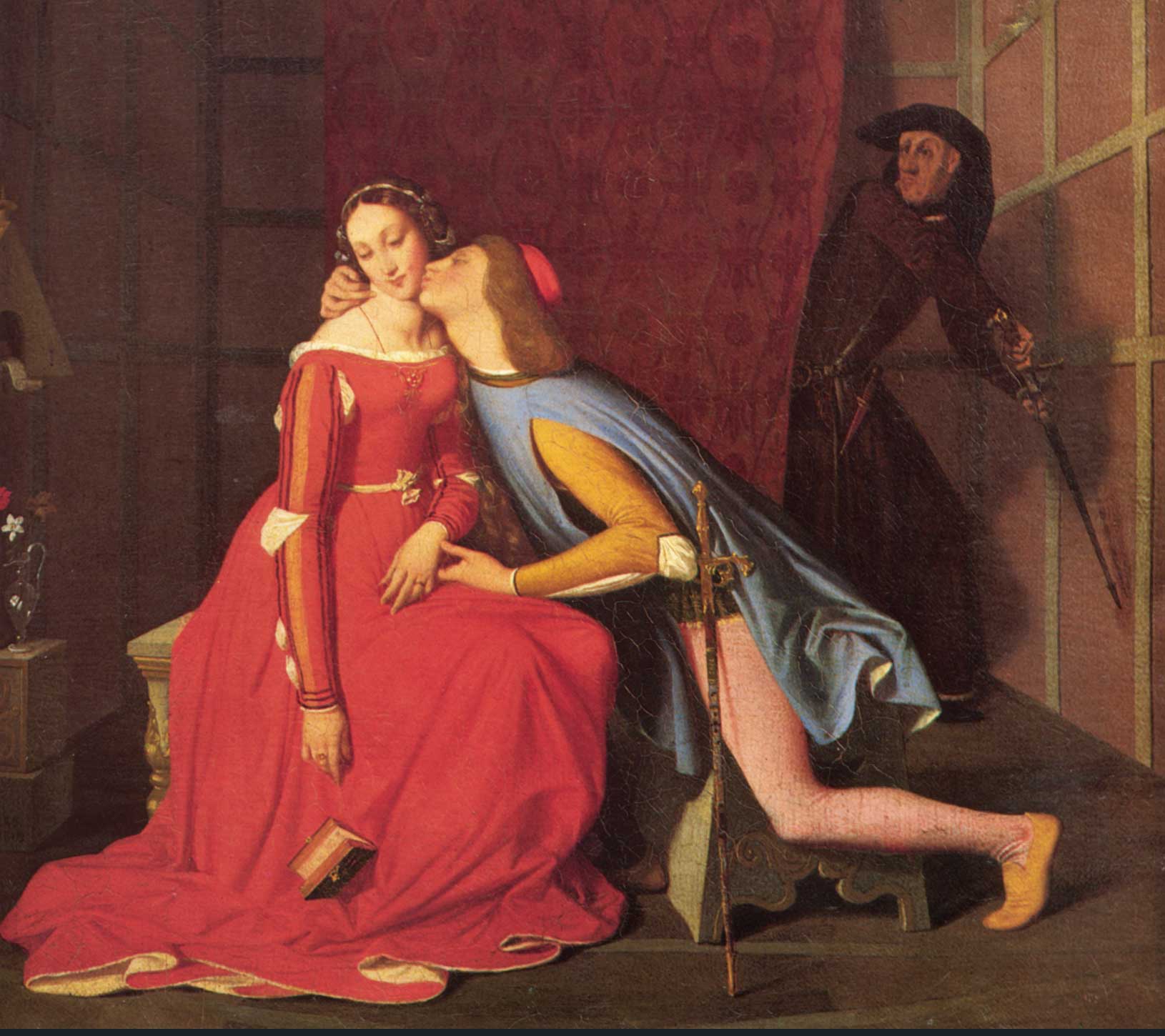
I learned this song from a Riverside album by Bob Gibson, “I Come for to Sing.” According to some internet research, Joan Baez must have learned it that way, as well, mostly. She may have conflated both his and the older one, below. Again, from the internet, I have learned that it is likely a version of “Little Musgrave and Lady Barnet,” purported to go back as far as the fifteenth century.
Perhaps the first version, from which others have learned the song, was by Ewan MacColl and Peggy Seeger on a Folkways recording in 1961. Fairport Convention did it and Doc Watson, too. I have only heard the Gibson version, and I believe I have stayed close to his rendition.
Listen to Harry singing “Matty Groves:”
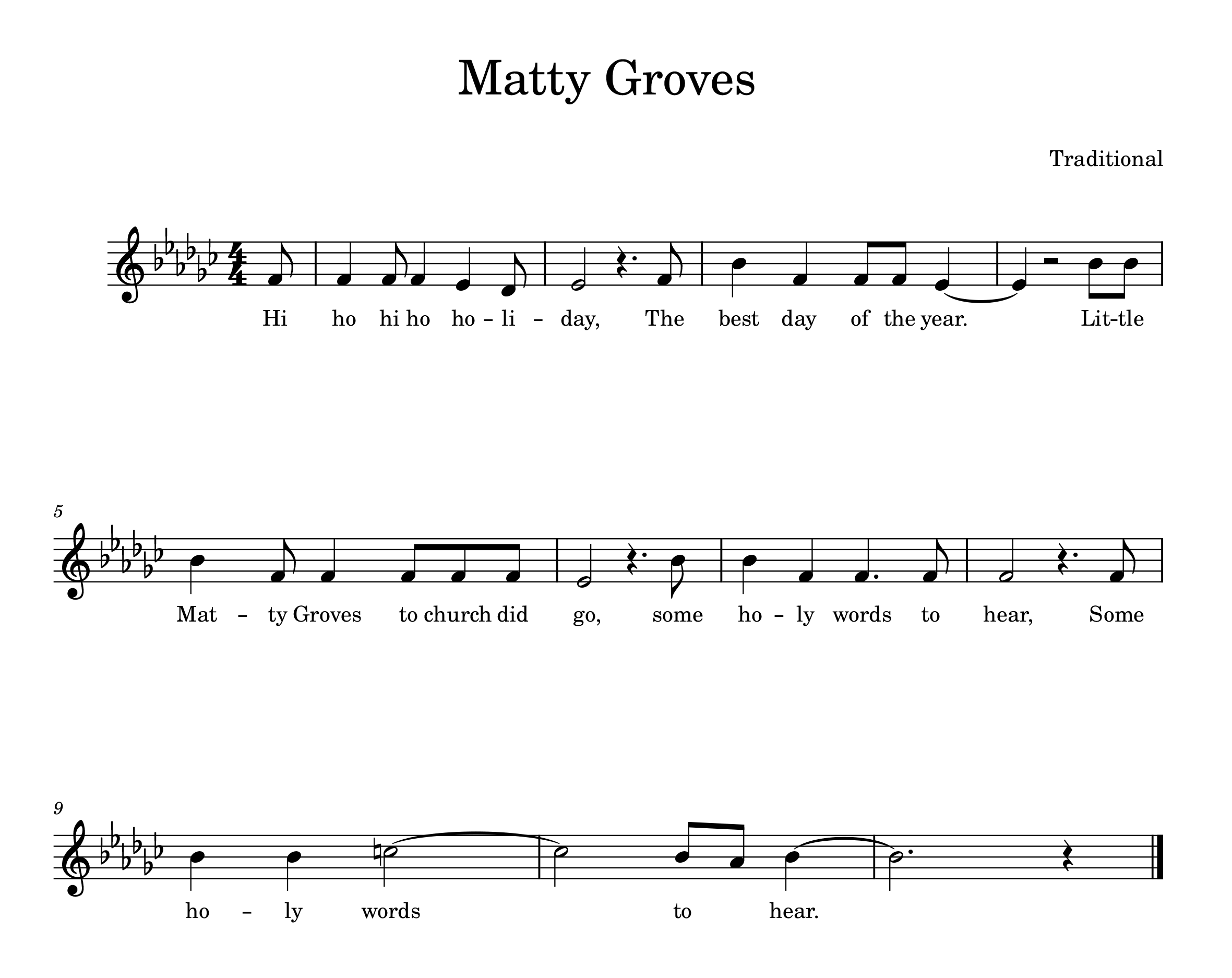
Lyrics
Hi ho, hi ho holiday, the best day of the year.
Little Matty Groves to church did go, some holy words to hear,
Some holy words to hear.
He spied three ladies dressed in black, as they came into view.
Lord Arlyn’s wife among them walked, a flower among the few,
A flower among the few.
She trip-ed up to Matty Groves, her eyes so low cast down,
Oh pray, oh pray, come with me stay, as you pass through the town,
As you pass through the town.
I cannot go, and I dare not go. I fear ‘twould cost my life.
For I can tell by the little ring you wear that you are Lord Arlyn’s wife,
You’re the great Lord Arlyn’s wife.
This may be false, it may be true, I can’t deny it all.
But Arlyn’s gone to consecrate King Henry at Whitehall,
King Henry at Whitehall.
Oh pray, oh pray, come with me stay, I’ll hide you out of sight.
And I’ll serve you there beyond compare, and sleep with you the night,
And sleep with you the night.
Her little page did listen well to all that they did say.
And ere that they were out of sight, He quickly sped away,
He quickly sped away.
He did run the Kings Highway, he swam across the tide.
And he ne’er did stop until he came to the great Lord Arlyn’s side,
To the great Lord Arlyn’s side.
What news, what news, me bowly boy, what news bring you to me?
My castle burned, my tenants wronged, or my lady with baby,
My lady with baby.
No harm has come your house and land, the little page did say,
But Matty Groves is bedded up, with your fair lady gay,
With your fair Lady gay.
Lord Arlyn called his men and he bade them with him go.
And he bade them ne’er a word to speak, and ne’er a horn to blow,
And ne’er a horn to blow.
Among Lord Arlyn’s merry men ’twas one who wished no ill,
And ere the castle was in sight, blew his horn so loud so shrill,
Blew a blast so loud so shrill.
What’s this, what’s this, cried Matty Groves, what’s this that I do hear?
It must be Lord Arlyn’s merry men, the ones that I do fear,
The ones that I do fear.
Lie down lie down, cried Arlyn’s wife, come keep my back from cold.
It’s only my uncle’s shepherd men, a-calling their sheep to fold,
A-calling their sheep to fold.
Little Matty Groves he did lie down, and he took a nap asleep.
And when he woke, Lord Arlyn was a-standing at his feet,
A-standin’ at his bed feet.
Well, it’s how do you like your pillow said he, and it’s how do you like your sheets
And how do you like that fair lady gay, what lies in your arms asleep?
What lies in your arms asleep.
Very well do I like my pillow said he, and it’s better do I like my sheets,
But it’s best, do I like, that fair lady gay, what lies, but ain’t asleep,
Who lies but ain’t asleep.
Rise up, rise up, little Matty Groves, defend you if you can.
In England, it shall never be said, I slewed a sleeping man,
I slewed a sleeping man.
I cannot rise and I dare not rise, I fear ‘twould cost my life.
For you have got two bitter swords and I ain’t got a knife,
I ain’t got a knife.
Oh yes, I have two bitter swords, they cost me deep in the purse,
But you shall have the better one and I shall have the worst,
I shall have the worse.
Firstest stroke little Matty struck, he hurt Lord Arlyn sore.
And the nextest stroke Lord Arlyn struck, little Matty struck no more,
Little Matty struck no more.
Rise up, rise up, my gay young wife. Draw on your wedding clothes.
And tell me do you like me best, or like you Matty Groves
Or the now dead Matty Groves.
She lifted Matty’s dying head, and kissed from cheek to chin.
It’s Matty Groves I’d rather have, than Arlyn and all his kin,
Than Arlyn, and all his kin.
He took his lady by the hand, and he dragged her through the hall.
And with his sword, he cut off her head, and he stove it again’ the wall
He stove it again’ the wall.
Oh, woe is me, oh woe is me, why stayed you not my hand?
For I have killed the fairest folk in all of England,
In all of England.
Harry Tuft says: I grew up in Philadelphia in a family that enjoyed music. I owe my first interest in folk music to the recordings of Pete Seeger and Big Bill Broonzy, and also to Roger Abrahams and Bob Coltman, early influencers. I credit the Gilded Cage coffee house also as a great incubator in the late fifties in Philadelphia. I started a folk music store in Denver in 1962, the Denver Folklore Center, which I ran until I sold it to friends in 2016. This has allowed me to concentrate on making music, a primary goal when I came to Colorado in 1960. (It’s only taken me sixty years to pursue my real love, making music for folks). I have also been a member of the group Grubstake, which has had a run for over forty years. It was dormant for a few years, but has once again surfaced for occasional performances.
Submitted by Mara Levine
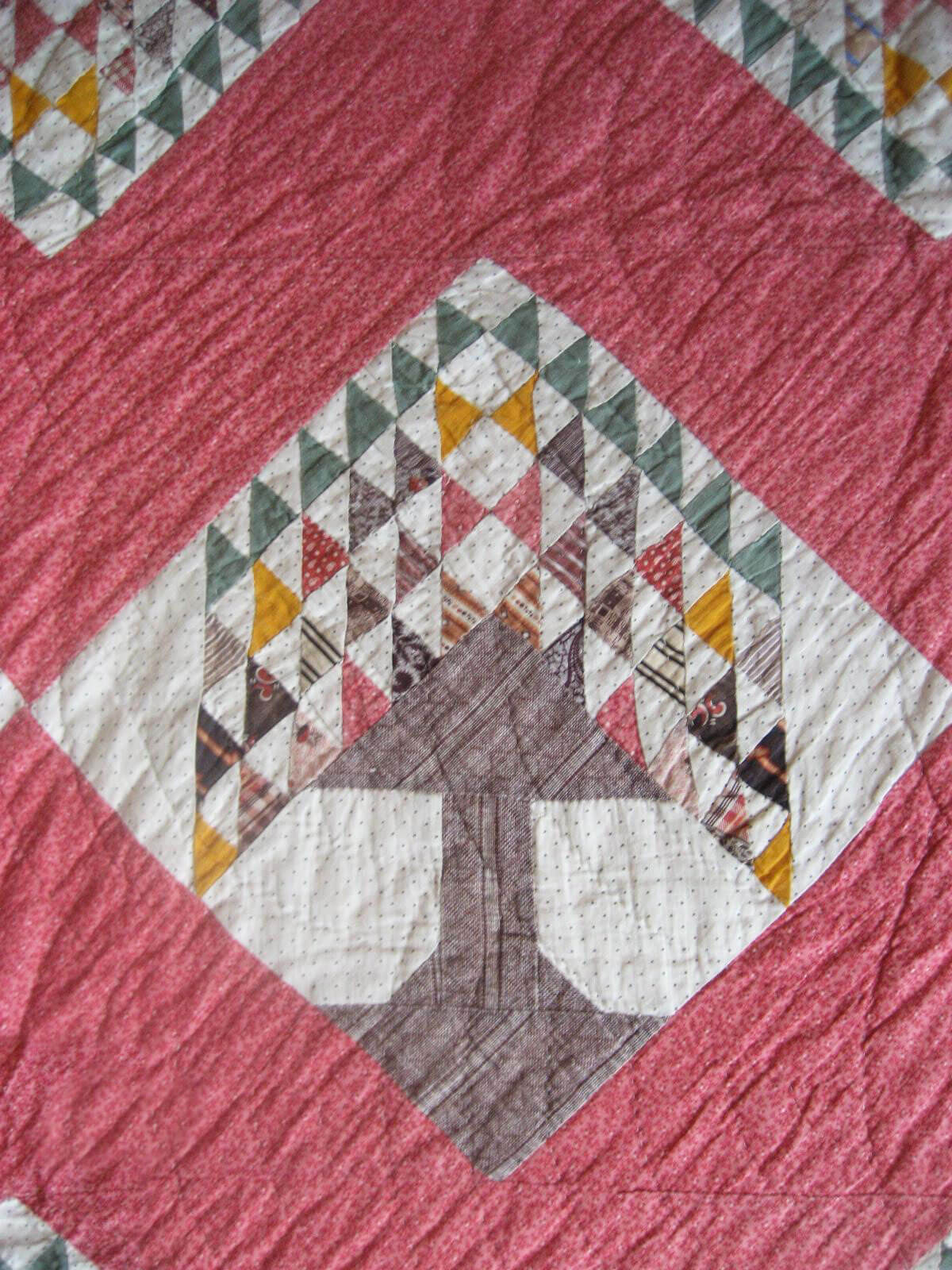
“Tree of Life” was written for the 1983 musical theater production Plain Hearts: Songs and Stories of Midwestern Prairie Women by Lance Belville, with music and lyrics by Eric Peltoniemi. The play features a variety of scenes and songs celebrating the lives of pioneer women who settled in the midwest in the early 1900’s. According to Eric, much of it was based on his grandmother’s and great-grandmother’s lives.
The first two verses of “Tree of Life” are entirely comprised of the names of quilt block patterns. Eric related to me: “I was inspired by a fabulous hardcover book I found filled with hundreds of quilt patterns. I thought their names were so evocative that I made them the lyrics of the song.”
Listen to Mara singing “Tree of Life:”
Track Credits: From the Facets of Folk album
Written by Eric Peltoniemi, © Eric Peltoniemi Music LLC / ASCAP
Mara Levine (lead & harmony vocals), Caroline Cutroneo (harmony vocals & rhythm guitar), Hillary Foxsong (harmony vocals), Ed Trickett (hammered dulcimer), John Guth: Bass
Vocal arrangements: Mara Levine/ Bob Harris / Caroline Cutroneo
Engineered by Bob Harris; mixed and produced by Bob Harris and Mara Levine at Ampersand Records, Bridgewater, NJ.
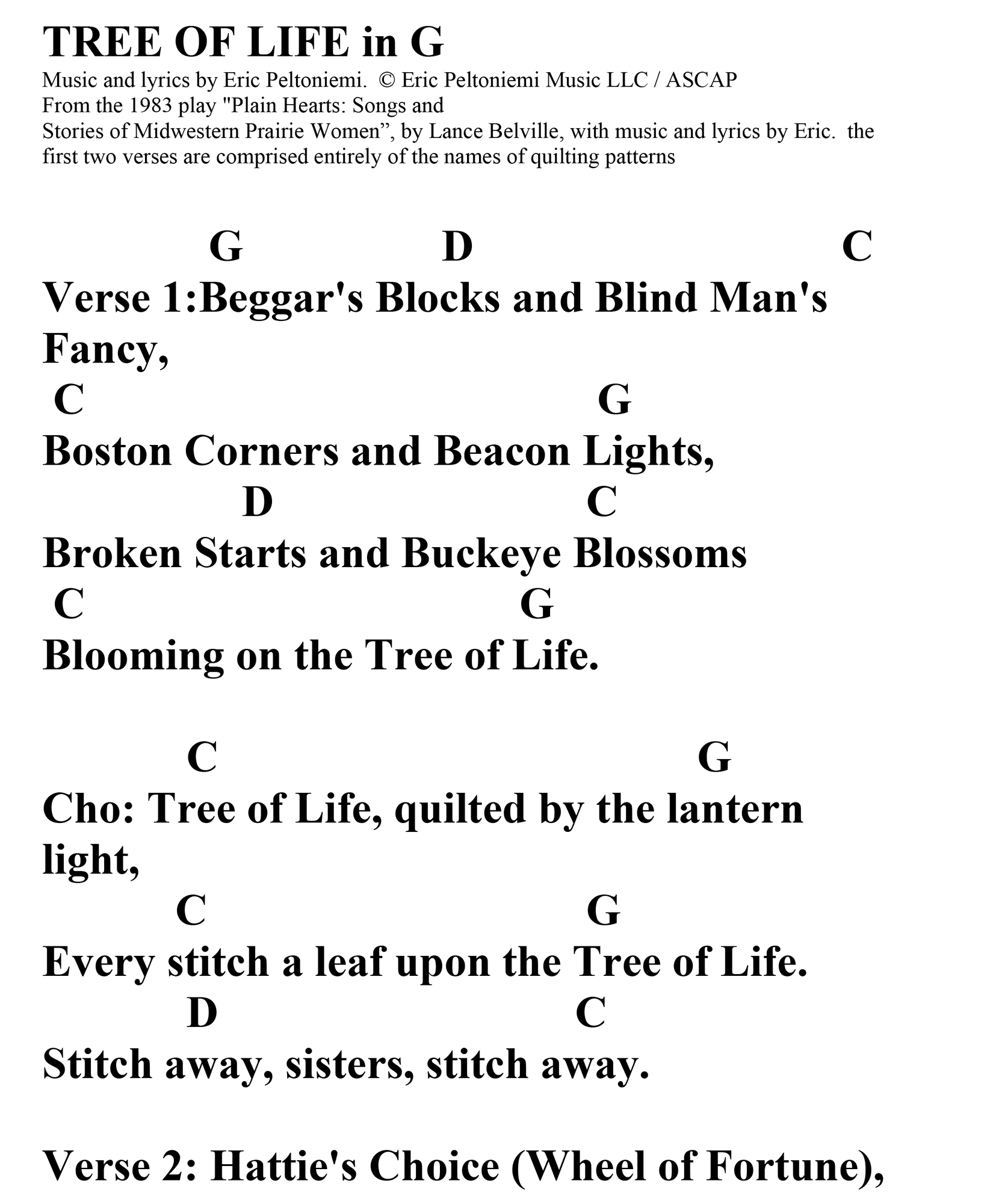
Lyrics: Tree of Life
By Eric Peltoniemi
Beggar’s Blocks and Blind Man’s Fancy,
Boston Corners and Beacon Lights,
Broken Starts and Buckeye Blossoms
Blooming on the Tree of Life.
Chorus:
Tree of Life, quilted by the lantern light,
Every stitch a leaf upon the Tree of Life.
Stitch away, sisters, stitch away.
Hattie’s Choice (Wheel of Fortune), and High Hosanna (Indiana),
Hills and Valleys (Sweet Wood Lilies)
and Heart’s Delight (Tail of Benjamin’s Kite),
Hummingbird (Hovering Gander) in Honeysuckle (Oleander),
Blooming on the Tree of Life.
Chorus
Break
We’re only known as someone’s mother,
Someone’s daughter, or someone’s wife,
But with our hands and with our vision,
We make the patterns on the Tree of Life.
Called “one of the best singers of her generation” by Christine Lavin, and “golden voiced” by David Amram, song finder Mara Levine selects songs with inherent beauty, then crafts them to a glittering brilliance. According to folk singer Si Kahn, “Layering harmony line on top of harmony line, Levine creates rich tapestries of sound and emotion.”
Mara joined Bell Buckle Records in 2020. Her critically acclaimed albums Facets of Folk (2013) and Jewels and Harmony (2019) were each #1 on the Folk Alliance International Folk DJ Chart upon release, and reached #3 for the year. Mara has appeared on radio programs and at venues and festivals in the US, Canada, and Europe. Her performances are known for thoughtful and inspiring interpretations of traditional songs, worthy modern classics, protest music, and some of the sweetest vocalizing you’ll find this side of the golden sounds of the 60s, with songs that stir the emotions, and encourage singing along!
Chris Spector of Midwest Record described her as “the new standard bearer for folk music” after the release of her latest project, and according to Les Siemieniuk of Penguin Eggs, “The world needs more such interpreters of fine and contemporary folk songs.”
 Thanks to the Massachusetts Cultural Council for their generous support.