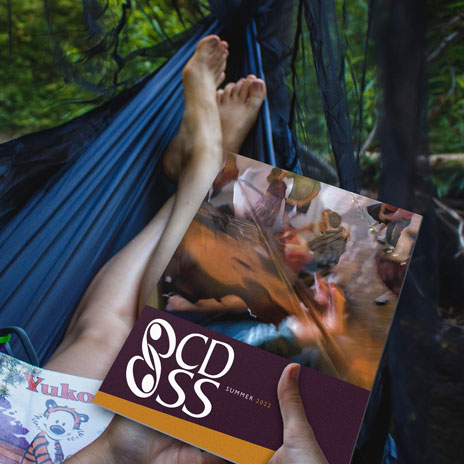
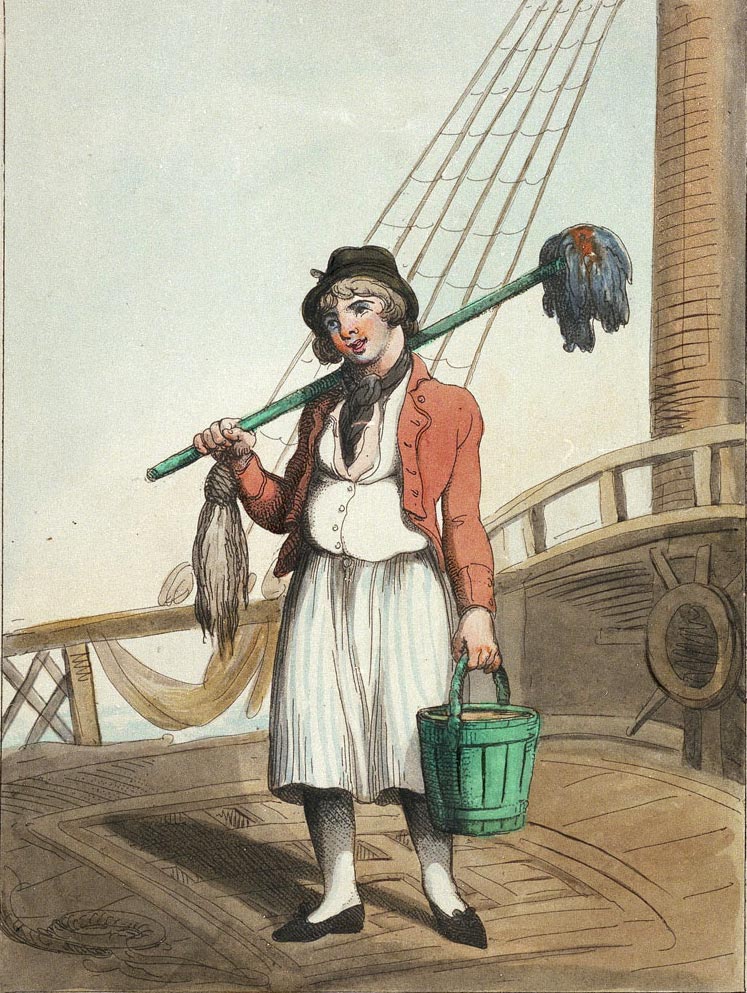
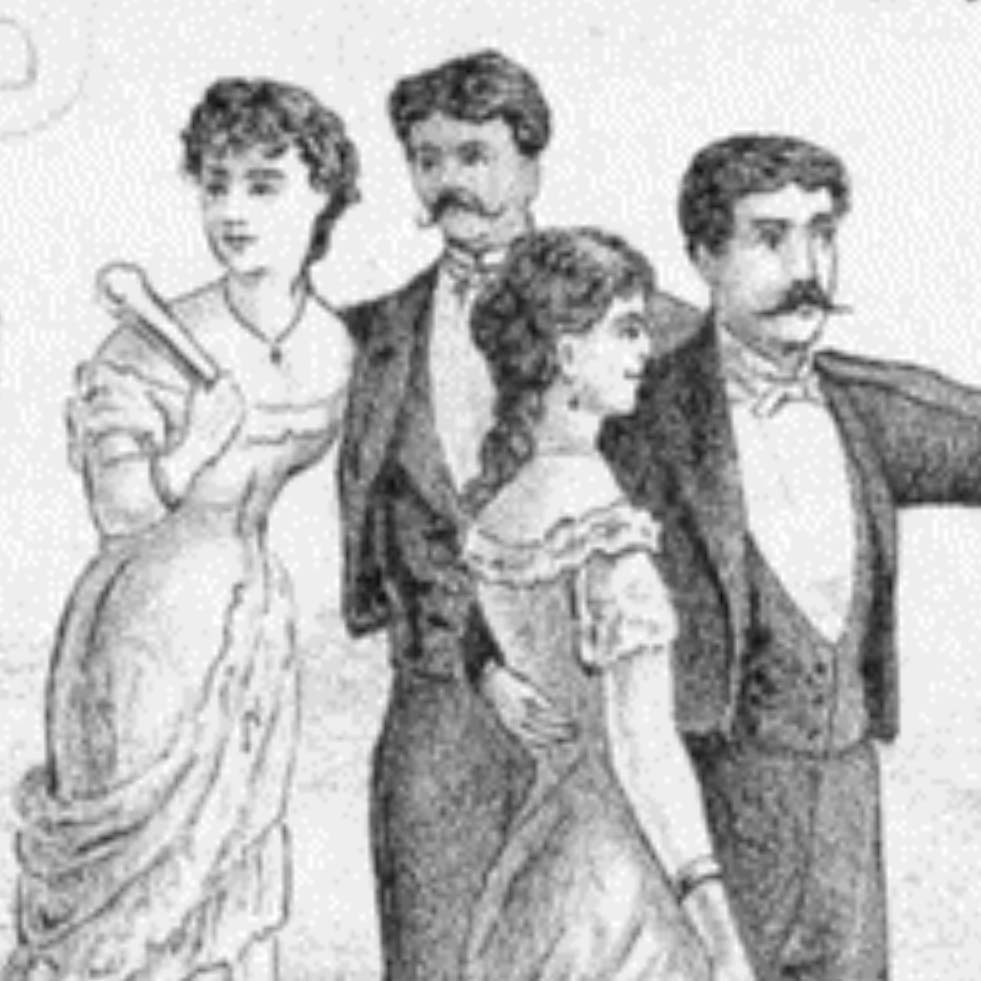
The Winter 2021 CDSS News is now available! Learn about Ignatius Sancho, a country dance composer who started life on a slave ship; dance the Pandemic Waltz; get some tips for weathering the winter together; and remember that “Songs Stay Sung.” Plus much more!

CDSS is an equal opportunity employer. Neither your gender, your religion, your personal life, your skin color, nor indeed any physical attribute makes a difference in our hiring process. If you’re smart and good at what you do, then come as you are. Black, Indigenous, and people of color (BIPOC), immigrants, and LGBTQ+ candidates are strongly encouraged to apply.

We don't have any open positions right now; please check again soon! Camp jobs for summer 2026 will be posted in late 2025.

In early 1900s England, there was a growth of interest in traditional English country, morris, and sword dances. In 1911, the English Folk Dance Society (EFDS) was founded to preserve and promote these dances. Subsequently, several teachers of these traditions, including Mary Neal, Florence “Florrie” Warren, A. Claud Wright, and Cecil Sharp, came to the US to teach morris and English country dance.

In 1915, aficionados of the dance in Boston established the first US branch of the EFDS with philanthropist Helen Storrow as the president. Branches were also established in Chicago, New York, and Pittsburgh. The organization originally focused on performance and demonstration groups, rather than on participatory dance. The Boston branch sponsored summer workshops, and in 1933 Helen Storrow hosted the workshops at her Pine Tree Camp near Plymouth, MA. The name was later changed to Pinewoods. 

In 1933, the English Folk Dance and Song Society of America (EFDSSA) was formed, uniting the several regional US branches of the EFDS. A national headquarters was established in New York City, and May Gadd, who had come to the US in 1927 to teach dance, was appointed first national director. The organization’s name was changed to the Country Dance Society in 1949; “and Song” was added in 1967. CDSS began publishing information about dance and song traditions with The Country Dancer in 1940, in time leading to today’s CDSS News.

When Helen Storrow died in 1944, she left Pinewoods Camp to her assistant, Lily Conant, and Lily’s husband, Richard. CDSS continued to sponsor dance camps at Pinewoods, adding more weeks with different focuses, including English, American, early music, and folk music.

In 1975, CDSS added the first Family Week, eventually sponsoring up to four family programs at different facilities. In 1976, the Conant family, CDSS, and other user groups formed an independent organization, Pinewoods Camp, Inc., to own and operate Pinewoods. Since then, CDSS has operated summer programs at Pinewoods and in the Mid-Atlantic, New Hampshire/Maine, and Michigan.

As interest in modern contra, morris, and English country dancing grew starting in the 1970s, CDSS built connections and offered support to local groups, including newer groups on the West Coast. This outreach expanded CDSS membership throughout the US and Canada.

In 1987, the CDSS office moved from New York City to western Massachusetts and established a mail-order store to distribute books and instructional materials, recordings, and ritual dance supplies. 

In the early 2000s, the office modernized operations, incorporated non-profit best practices, and began a multi-year initiative to develop new leaders in programs, on staff, and on the board. The first CDSS website was published in 2009, and operations moved online, including newsletters, camp registration, programming, and the CDSS Store. In 2015, CDSS marked its centennial with celebrations in communities throughout the US and Canada, artist residencies in seven communities, and a major capital campaign.

In recent years, the organization has responded to the changing needs of the community, forming task groups to support educators, pilot a regional ambassador project, organize our archives, and share resources on community safety in local communities.

In 2018, CDSS began transitioning from an office-based organization to a remote team with employees across the continent. In 2020, CDSS convened a task group and an external advisory group to address cultural equity issues. During the COVID-19 pandemic, CDSS offered online workshops and web chats that were an important source of information for individuals and groups. In 2022, CDSS redesigned its website to provide better access to resources and publicize dance activities throughout the US and Canada. In 2023, CDSS adopted a new five-year strategic plan to support generational transitions in member communities and the living traditions that continue to grow and evolve.

Prepared by the CDSS Cultural Equity History Working Group, composed of board and community members. Last updated: August 2024.

This page was created to provide updates on our ongoing efforts to improve equity and remove barriers to access in our organization. This is not a finished story, nor is it one of rapid change. It is a story of deep introspection, steady progress, and work that will continue. We hope you will take the time to read about where we are and how this work is informing our new strategic plan. If you have feedback, suggestions, or questions, you are welcome to email them to [email protected].


Quick Links

Background

Adopting a Core Value of Inclusivity

In 2018 our board and staff adopted a new five-year strategic plan, which includes mission, vision, and focus area statements, as well as four core values: stewardship, collaboration, creativity, and inclusivity. In the process of selecting our core values, we discussed a wide range of topics, from the community-based nature of the traditions we love, to the responsibility we hold to keep them healthy and thriving, and the ways in which we can remove barriers for folks who have felt excluded. The new plan went into effect in 2019. We convened board/staff task groups to support the work and began our five-year exploration of the way the mission, vision, and values manifest throughout our operations. We were excited and energized about building the future of CDSS with these new goals.

Responding to the World Around Us

A strong mission and strategic plan can carry an organization a long way, but sometimes the outside world necessitates a reevaluation of our priorities. The past decade of increased social activism came to a close with a contentious U.S. presidential election, the global COVID-19 pandemic, and continuing violence against Black, Indigenous, and people of color (BIPOC) individuals in the U.S. We have all been affected by these movements. And like many other predominantly white-led organizations, CDSS began reflecting as an organization on systemic racism in our institutions and how it creates misalignment between an institution’s intent and its impact. As people who believe in the positive health and emotional benefits of participatory arts, we knew we needed to do more to address structural barriers that prevent people from participating or feeling comfortable in our spaces.

The killing of George Floyd in May of 2020 felt like a tipping point—a call to action for organizations to interrogate the unexamined structural racism and cultural inequity in our spheres. That summer the CDSS staff and board had conversations about what more we could do to educate ourselves and how we could work against systemic injustice in the folk arts community. We issued a statement affirming the need for this work within our institutions. We opened up our community grants to people doing anti-racism and cultural equity work in their dance, music, and song communities. We listened to community feedback calling on us to recognize and address systemic racism as it manifests in how we operate, to go beyond performative statements and checking boxes, and really commit time and resources to long-term diversity, equity, and inclusion work. And we recognized that we needed more diverse voices and perspectives to help us see the things we could not see. People who benefit from systemic inequity often have the hardest time recognizing it. Inspired by the work of Americans for the Arts, we formed a Cultural Equity Task Group that included members of the staff and board, whose purpose was to convene a year-long advisory group of diverse individuals to evaluate our organization.

Committing to Online Programming

As part of our response to the COVID pandemic and in an attempt to broaden access to our programs, CDSS committed to year-round online programming. The organization’s main programming for the past 50+ years had been in-person camp sessions. These require money, time, and resources to attend, and are often in locations that have limited accessibility for folks with disabilities. We knew this, and yet prior to the pandemic it was hard to imagine conducting community-based programming online. The pandemic revealed a lot about what is possible for the arts online, and what types of programming and training work best in that format. So in 2021 we expanded our regular programming to include free and low-cost online offerings year-round, creating more accessible opportunities for folks everywhere to learn and develop their skills.

Convening an Independent Cultural Equity Advisory Group

Also in early 2021, the Cultural Equity Advisory Group’s year of work began. Unlike a “task group” that has a clearly defined task to accomplish, an “advisory group” is asked to provide insight and advice to the board and staff. We asked the Cultural Equity Advisory Group to review our operations, our programs, and our outward communications within the framework of our existing mission, and to identify actions we could take to promote the living traditions that are dear to us in anti-oppressive ways. We asked them to help us understand the ways that CDSS has caused harm so we can stop perpetuating that harm. We wanted to make sure that, in our work and play, we carry out our mission of strengthening and supporting communities in a way that builds more equitable relationships.

The advisory group worked independently, with support and information from our board and staff as requested. As they conducted their review, we continued our efforts to facilitate more training sessions for our staff, board, and communities, as well as making grant funding available to local groups interested in anti-racism and cultural equity work. In March of 2022, the Cultural Equity Advisory Group wrapped up their work and presented the board and staff with a write-up of their process, along with a report and recommendations.

What We Understand About Cultural Equity at CDSS

We are continuously learning and striving to be a more culturally equitable organization. Receiving the materials from the Cultural Equity Advisory Group was a significant point along the way that has helped us imagine and consider new perspectives and ideas that both challenge and inspire us. We look forward to implementing their recommendations (see “What We’ve Done” and “What’s Next” for more details) and to seek out new sources of knowledge and advice in our quest for more equity.

Some of our key lessons so far:

  • The literal reading of our mission statement matters. We need a mission that closely reflects the activities of our organization and the communities we serve, rather than implying that we are serving every dance and music tradition in North America.

  • Our connection to local communities matters. We cannot create a more equitable future alone. We’re continuing to learn as an organization—through our work, from the example of others who are already making changes, and from organizations who have been doing this work all along. As we learn, we have a responsibility to make information, resources, programming, and support available for organizers doing cultural equity work in their local communities.

  • The story we tell matters. We need to interrogate our organization’s history, not to erase, but to expand the narrative, acknowledging past harm and omissions, such as the impact on indigenous populations as this land was colonized and the erasure of Black and Indigenous contributions to folk traditions born on this continent. We need to set our story in the broader context of all participatory folk art traditions on the continent.

  • Intention in programming matters. Though CDSS draws on the expertise of independent dance, music, and song leaders to create our programming, we are ultimately responsible for what is presented in our programs. We have a responsibility to provide guidance, support, and resources so that we can work together with artists and participants to correct harmful narratives and provide appropriate historical context to the materials we share.

  • Representation matters. We need to do a better job of recognizing and representing the diversity that exists in the CDSS network of communities in the programming we offer and among the writers and contributors with whom we work.

  • The materials we make available matter. We are continuing to share unexamined historical materials via our store, publications, and resources, some of which perpetuate problematic narratives. We need to review what we are offering, critically evaluate our store items and publications, and provide context and additional information where necessary.

  • Access to decision-making matters. Service on our board right now requires a certain amount of privilege, including time, energy, and the means and ability to travel. Our existing practices for bringing new leadership to both the board and staff are not bringing enough diverse voices to the table. We need to critically analyze the way we are structured and our organizational culture in order to recruit a more diverse board and staff.

Work We’ve Done

For members:

For grant recipients:

  • Expanded grants to include equity and anti-racism training for local organizations
  • Hosted the web chat Building Cultural Equity in Communities, featuring recipients of grants for equity and anti-racism trainings, October 26, 2022

In our sales and publications:

In our camp programs:

  • Piloted a sliding scale tuition model at American Dance & Music Week 2023. Some results here. Expanded to all adult sessions at Pinewoods in 2024.
  • Piloted new pay model at English Dance Week 2023 and more sessions in 2024. Review of success is ongoing.

On the CDSS Board:

  • Created the Cultural Equity Committee, an ongoing sub-group of the board based on the Cultural Equity Task Group, in 2024

Work We’ve Supported

CDSS Community Grant Recipients

  • Circle Up, Volume 1 zine for inclusive square dancing
  • Make Every Space Safer in Trad Music Communities, to create a set of community agreements that people in our music communities can commit to
  • John C. Campbell Folk School, to host a community dance series featuring positional calling
  • DanceFlurry Organization, to participate in online diversity, equity, and inclusion training

Other Collaborations

  • Songs That Speak – video series by Saro Lynch-Thomason
  • Badass Women in Folk Song – virtual class from Saro Lynch-Thomason

What's Coming Next

As we continue our work at CDSS, we will continue to intertwine themes of equity and inclusion throughout our conversations. Listed below are some goals we intend to work toward.

On the CDSS Board…

  • Review and update the CDSS Board travel reimbursement policy and procedures, to address some of the economic barriers to joining the CDSS Board

For Affiliates and organizers…

  • Continue making CDSS Grants available for diversity, equity, and inclusion training and workshops for local groups
  • Follow up with recipients of CDSS Grants for cultural equity training to better understand their experiences and learn how best to support other groups interested in this work

  • Establish a recurring section of the quarterly Affiliate eNews for cultural equity content

In our internal operations…

  • Increase usage of BIPOC-owned printers, designers, and mailing houses, or businesses owned by people with other marginalized identities

  • Practice equitable meeting facilitation models to ensure every board/staff member is heard during meetings

In our development work…

  • Identify training resources and opportunities for the board and staff on equitable fundraising models

  • Explore building a more accessible and inclusive base of support for the organization

In our camp programs…

  • Identify strategies for improving the experience of new staff and campers, particularly BIPOC staff and campers

  • Clarify the purpose of our scholarship program, improve and simplify the application process, and ensure that the distribution of funds aligns with the stated goals of the program

We think it’s important, too, to acknowledge that this has been challenging work. Like many groups, the board and staff of CDSS desire to be unified. But we are 33 different individuals with different backgrounds and perspectives. We do not agree on all things or always see eye-to-eye, and disagreement is uncomfortable. We understand, too, that disagreement, conflict, and discomfort are not inherently bad things, that they can lead to deep understanding and good pathways forward.

If you have any questions, feedback, or ideas about CDSS and equity, please send them to Executive Director Katy German ([email protected]) or Board President David Smukler ([email protected]). In the meantime, we hope you are finding opportunities to fill your soul with dance, music, and song! 

Our geographically diverse board is listed below. Correspondence for them may be sent to [email protected]. Click each board member’s name or photo to learn more about their involvement with the community.

CDSS Bylaws

Officers


Board Members-at-large


Board Committees and Task Groups

  • Executive Committee

    • David Smukler (President)
    • Luanne Stiles (Vice President)
    • Meg Dedolph (VP-elect)
    • Michael Wood (Treasurer)
    • Michael Bean (Secretary)
    • Margaret Bary
    • Wendy Clarke
    • Susan English
    • Sandy Knudson
  • Awards Committee

    • Craig Meltzner (chair)
    • Rhonda Cayford
    • Susan English
    • Rich Goss
    • Emily Addison**
    • Leslie Gotfrit**
    • Brian Lindsay**
    • Eric Schedler**
    • David Smukler (ex officio)
    • Katy German (ex officio)*
  • Board Tech Management Committee

    • Glenn Manuel (chair)
    • Marni Rachmiel
    • Michael Bean
    • Michael Wood
    • Diane Silver**
    • David Smukler (ex officio)
  • Cultural Equity Committee

    • Margaret Bary (chair)
    • Rhonda Cayford
    • Rich Goss
    • Marni Rachmiel
    • Whitney Rowlett*
    • Chris Bracken**
    • Jacob Chen**
    • Clover Johnson**
    • David Smukler (ex officio)
    • Katy German (ex officio)*
  • Finance / Audit Committee

    • Michael Wood (chair)
    • Greer Hannan
    • Jenna Barron
    • Joel Bluestein**
    • Ben Rotenberg**
    • Jerry Stein**
    • Juliette Webb**
    • David Smukler (ex officio)
    • Katy German (ex officio)*
  • Fund Development Committee

    • Jenna Barron (chair)
    • Greer Hannan
    • Sandy Knudson
    • Luanne Stiles
    • Audrey Jaber*
    • Charmaine Slaven*
    • Marguerite Durant**
    • Pam Paulson**
    • Rebecca Dravich**
    • David Smukler (ex officio)
    • Michael Wood (ex officio)
    • Katy German (ex officio)*
  • Governance Committee

    • Luanne Stiles (chair)
    • Wendy Clarke
    • Meg Dedolph
    • Glenn Manuel
    • Marni Rachmiel
    • David Smukler (ex officio)
    • Katy German (ex officio)*
  • New Board Training

    • Luanne Stiles (co-chair)
    • Wendy Clarke (co-chair)
    • Rhonda Cayford
    • Sandy Knudson
  • Nominating Committee

    • Wendy Clarke (chair)
    • Craig Meltzner
    • Brooke Friendly**
    • Wendy Graham**
    • Lisa Greenleaf**
    • Juliette Webb**
  • Personnel Committee

    • Luanne Stiles (chair)
    • Wendy Clarke
    • Craig Meltzner
    • Marni Rachmiel
    • David Smukler (ex officio)
  • Pinewoods Inc. Relations Committee

    • Margaret Bary (chair)
    • Jenna Barron
    • Laura Parsons—CDSS Rep to PCI**
    • Dan Blim**
    • David Smukler (ex officio)
    • Katy German (ex officio)*
  • CDSS Reps on the PCI Board

    • Gillian Stewart (Vice-President)
    • Sonya Kaufman (Secretary)
    • Jan Elliott
    • Alex Ellis
    • Leah Gordon
    • John Lam
    • Harris Lapiroff
    • Jo Rasi
    • Laura Parsons
    • Michal Warshow
  • Membership Model Task Group

    • Jenna Barron
    • Meg Dedolph
    • Audrey Jaber*
    • Charmaine Slaven*
    • Joel Bluestein**
    • Luke Donforth**
    • Avia Moore**
    • David Smukler (ex officio)
    • Katy German (ex officio)*
  • Online Programming Task Group

    • Sandy Knudson (chair)
    • Michael Bean
    • Susan English
    • Whitney Rowlett*
    • David Smukler (ex officio)
    • Katy German (ex officio)*
  • Affiliate Outreach Task Group

    • Gaye Fifer** (chair)
    • Glenn Manuel
    • Rhonda Cayford
    • Rich Goss
    • Norman Farrell**
    • Matt Reyna*
    • David Smukler (ex officio)
    • Katy German (ex officio)*

* = CDSS staff member
** = community (non-board) member

Phone: 413-203-5467
Address: 116 Pleasant St., Suite 334
Easthampton, MA 01027-2784
Map & Directions
General Email: [email protected]

Join Our Email List

Meet the CDSS Team

Map & Directions

Most weeks, our office and store are staffed Monday–Friday, 9:30–5:00. Please call before traveling: 413-203-5467.

Where We Are in the Building

Enter through the “marquee” entrance in the middle of the building. (There is a huge vertical Eastworks sign and a smaller black and white marquee sign above the door.) Take the elevator (immediately to the left) or the stairs (immediately to the right) up to the third floor. Turn right down the first hallway, and #334 will be on your right, a few doors down.

Driving to CDSS

Coming from the South

From I-91 North, take Exit 17B (Easthampton). Follow Route 141 to Easthampton; at the foot of the mountain, turn right onto East St., and go approx. 2-3/10 miles. Turn left onto Ferry St., and follow to the end. Turn left onto Pleasant St., and go approx. 3/10 of a mile and turn left into the Eastworks parking lot.

Coming from the North

From I-91 South, take Exit 18 and turn right at the bottom of the ramp. Follow Route 5 for 6/10 miles and turn right onto East St. Continue for 1-4/10 miles and bear right onto Ferry St. Continue 9/10 miles to a “T” intersection and turn left onto Pleasant St. Go 3/10 miles and turn left into the Eastworks parking lot.

Most Recent LCA Recipient:

2026: David Millstone

We are delighted to announce that David Millstone of Lebanon, NH, is the recipient of the 2026 CDSS Lifetime Contribution Award. David is a dancer, caller, teacher, historian, and leader specializing in contra dance, New England squares, and English country dance.

For more than 40 years, David has helped and encouraged modern practitioners to connect with the historical roots of these living traditions. His passion for dance has informed and engaged people across the continent. From running local dances and mentoring new callers to creating documentary films, digital libraries, and interactive websites, David’s dynamic array of contributions will continue inspiring people for generations to come.

We will honor David on June 13, 2026, in Norwich, VT. Check out the Spring 2026 issue of the CDSS News for more information about David’s life and work and his celebration event!


Nominations for Future Lifetime Contribution Awards

Do you know someone who has made a long-term and exceptional contribution to the mission of CDSS? 

  • Have they led the way in preserving, promoting, and/or creating within the living traditions that CDSS stewards?
  • Has their contribution benefited people in a broad geographical area?
  • Has their contribution impacted more than one generation?
  • Have they worked in conjunction with CDSS, CDSS affiliates, or complementary organizations?

If the answer is “yes” to all of these, then you may know a future recipient of the CDSS Lifetime Contribution Award (LCA).

Examples of a long-term and exceptional contribution include:

  • Increasing the quality of what we do by inspiration, instruction, or excellent example
  • Bringing what we do to new communities
  • Expanding the repertoire of dance, music, and/or song through scholarship or original composition
  • Working behind the scenes or enabling others to make these contributions

Nominations for the 2027 Lifetime Contribution Award will open on January 1, 2026.

Living and posthumous nominations are combined, and all nominations use the same form. Submissions for people who have passed away are welcome anytime nominations are open (there’s no minimum or maximum time limit since the nominee died for you to make the nomination).

We consider nominations from previous years each time we select a recipient. If you’ve nominated someone before, feel free to fill out the form again if you want to add extra info. You can also get others to nominate that person too—more support for someone who’s been nominated before is always a good thing!


Past Recipients:

Honorary CDSS Members

The following people were made an Honorary CDSS Member before the origination of the Lifetime Contribution Awards:

  • 1996: Sue Salmons
  • 1992: Kate Van Winkle Keller
  • 1990: Marshall Barron