High Times with Balalaika—Sarah Jane Nelson
Waltham, MA
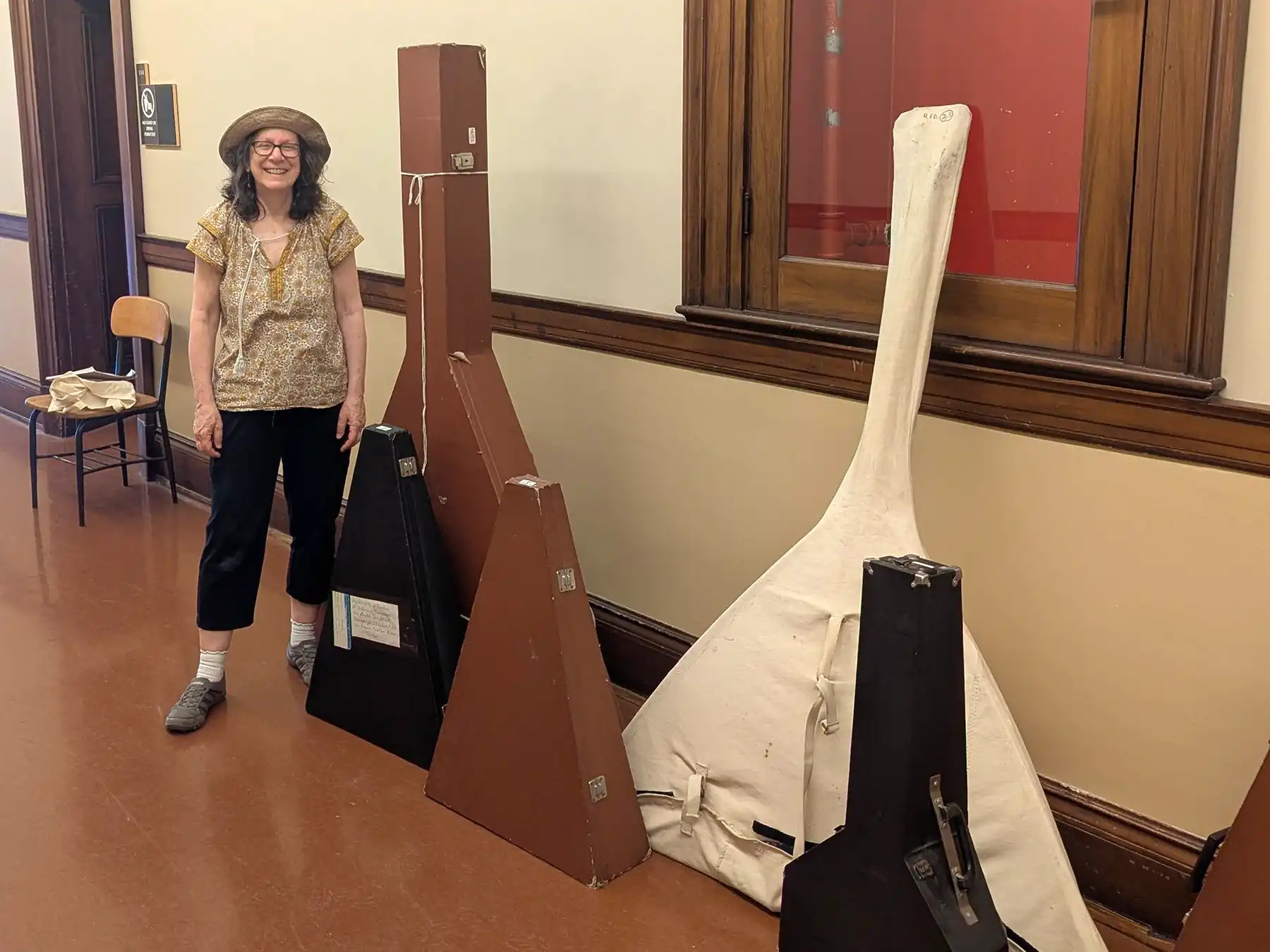
Researching Ukrainian and Russian émigrés whose folk music and dance enriched and enlivened the folk music scene in 20th century North America.
CDSS grant recipients must use the CDSS logo on their printed materials, website, and/or social media. When included on a webpage, blog, or social media site, please link the logo to the CDSS website, cdss.org.
The logo is available in two versions, horizontal and square, in either two colors or all black. It must be produced as shown without alteration. If your designs need an all-white version of these logos or if you need .ai/.eps files, please email [email protected].
Click on the link below the logo you want and the logo will open in another browser window. Then follow the instructions below:
PC users: Right-click on the link below the image you desire and select ‘Save Target As’ or ‘Save Link Target As’ to save the file to your desktop or appropriate folder.
Mac users: Control-click on the link below the image you desire and select “Save Link As” to save the file to your desktop or appropriate folder.
Waltham, MA
Researching Ukrainian and Russian émigrés whose folk music and dance enriched and enlivened the folk music scene in 20th century North America.

Originally published in the CDSS News, Fall/Winter 2025
There are so many incredible dance, music, and song events happening all around! Perhaps you make an annual journey to a favorite music festival, camp, or dance weekend. As we all travel to various places for community connection and enjoyment, what impact are we having on the environment? Carbon emissions from travel are undeniably contributing to global warming, so what can we do to lessen our impact on the environment while still participating in our favorite activities and communities? Here are some ideas we can all take into consideration as we travel:
This toolkit provides advice and resources to help organizers (you!) develop the policies, procedures, and supporting documents needed to understand and facilitate safety in your community. This toolkit is not prescriptive in regard to what your community “should be doing.” We recognize and value the range of living traditions practiced by many different communities.
This toolkit was produced by the CDSS Community Culture & Safety Task Group, 2018-2024. The CCSTG was formed to support local communities in their efforts to provide a safe environment for music, song, and dance events.
Online Workshop: Unpacking the CDSS Community Culture & Safety Toolkit
This 40-minute video introduces English Country Dancing. It teaches some of the basic moves found in many English Country dances; explains the structure of the dance; and entertains you with information about the history and practice of English country dancing.
Watch the video
Download a PDF of additional notes and an index to the video
Henry Morgenstein is the caller and the narrator (voiceover). Jacqui Morgenstein did the camera work, mostly using a Canon digital SLR recording in full HD.
Most of the footage was shot in a great dance studio in Traverse City, Michigan with friends who dance in our back room every week. But two of the dances we teach were in Emmanuel College, Cambridge UK and there are clips from Dartington Hall (also UK) and Pinewoods Camp in Massachusetts. Many of the dances were done to recorded CDs from the great ECD band Bare Necessities. The two in Cambridge were to live music by Notorious (Eden MacAdam-Somer and Larry Unger). None of the video was scripted, so all the incidents just happened as the result of dancers enjoying themselves.
In order to make this as unintimidating as possible to newcomers, we chose to film dancers who are simply people enjoying themselves. We feel that perfect dancing, while admittedly beautiful to watch, may well deter a newcomer from “giving it a go.” The fact that some mistakes are made and people recover with good humor should help to give the message that you don’t have to be perfect to do this.
In this panel discussion, dance organizers shared their experiences with leadership and volunteer changes in their local groups.
With special guests:
Dozens of people and groups in our dance and music communities have lost income, property, event spaces, and much more as a result of the California wildfires, Hurricane Helene, and other natural disasters.
Let’s show these folks our love! Click on a link below to send some kindness, business, or funds to the callers, musicians, singers, sound technicians, participants, and local groups who make our lives so sweet.
Listings appear in random order for fairness’s sake and expire after three months. To remove or extend your entry, or to make other edits, please email [email protected].
We’re helping our community to provide direct financial support to people in the trad dance/music/song community experiencing hardship or loss of income/property as a direct result of a large-scale natural disaster.
Please fill out this form to be included in our list, which has a randomized order to promote fair visibility to all who are included.
Contra Dance Calling: A Basic Text
The comprehensive entry-level book on contra dance calling by Tony Parkes. Every aspect of the caller’s work is dealt with clearly and thoroughly, including how to get started as a caller; music as it relates to the dance; timing and phrasing; voice technique; fitting the calls to the music; dance notation; teaching and walkthroughs; choosing material; calling for special groups; working with live or recorded music; buying and using a sound system; and running a dance series. In addition, the book includes an in-depth discussion of the basic movements; a selection of easy-to-call dances; a complete glossary of terms; an extensive list of resources; and information on how to use other dance books. In short, this is your guide to the entire world of contra dance calling, teaching, and organizing.
View the first chapter for free above—or purchase the complete book.
From Tony Parkes and Hands Four Productions
American Morris Newsletter Archive
The complete American Morris Newsletter, including scans of physical copies from 1977-2002 and digital copies from 2005-2008. Also includes a printed index to the volumes, directory of sides, and other special publications of the AMN.
From the Midwest Morris Ale